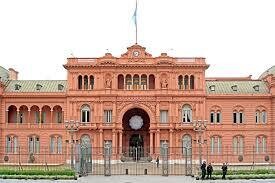
In a situation where the war already includes attacks on bases and cities in the Gulf, and where various capitals have ordered evacuations or staff cuts, the Casa Rosada chose a message that combines strategic alignment and domestic prevention: support for the operation and reinforcement of internal protection.
Politically, the Government interprets that the international scenario validates its foreign policy doctrine: closeness to the United States and Israel, breaking ambiguities with the Iranian regime, and building a "zero tolerance" profile against structures it defines as terrorist.
The official reading is clear: it is about differentiating the population from a regime it considers responsible for exporting violence, sustaining clandestine military structures, and challenging non-proliferation mechanisms.
Operationally, the conflict is already affecting the Argentine deployment in the area. The Argentine Embassy in Saudi Arabia issued maximum precaution recommendations for Argentine citizens in the Middle East, and the representation in Israel asked to follow the instructions of the Home Front Command and locate the nearest shelter.
In parallel, Government sources indicated that the Argentine diplomatic personnel in Iran were transferred to Azerbaijan, from where consular assistance is channeled.
The decision to harden internal security is also explained by the fresh memory of the attacks in Buenos Aires and the history of alerts about potential threats against community and diplomatic targets when there is an escalation between Iran and Israel. The Casa Rosada also reiterated the lack of cooperation from the Iranian regime in the clarification and trial of the accused pointed out by Argentine justice.
In recent hours, the Executive sought to balance a firm message with a humanitarian register: while supporting the operation to stop what it defined as a strategic threat, it expressed solidarity with the Iranian people "who have courageously manifested their aspiration to live in freedom" and respect for human rights.
The decision, communicated from the Casa Rosada, includes the preventive reinforcement of the custody of "sensitive targets", critical infrastructure, diplomatic headquarters, and the Jewish community, while the National Intelligence System was instructed to monitor the evolution of the conflict in coordination with international agencies.
The measure was announced in the context of an open war in the Middle East, after a joint offensive on targets in Tehran and other Iranian cities, and an immediate response from the regime with missiles and drones that extended to Israel and US bases in Gulf countries.
The Ministry of Foreign Affairs publicly supported the actions in the Middle East under the argument of "neutralizing the threat" that the Iranian regime represents for international stability.
The Government justified that measure by the history of operations attributed to the Iranian apparatus outside its borders and the attacks that hit Argentina in the 90s, with a focus on the bombing of the Israeli Embassy in Buenos Aires (1992) and the attack against the AMIA (1994).
With the regional board in full escalation —and with airspace closures, flight interruptions, and a chain of consular alerts— the Argentine Executive opted to anticipate possible local developments: from attempts at reprisals, to threats against interests linked to the United States and Israel abroad.
According to the official communiqué, the protection scheme will be expanded "preventively" over the priority targets.
In this framework, the Government also condemned the Iranian counterattacks, which impacted Israel and reached targets in the United Arab Emirates, Bahrain, Qatar, Saudi Arabia, and Kuwait, expanding the perception of regional risk.
The Argentine position is framed in a line of previous decisions. In the President's entourage, they emphasized that, in their opinion, Iran did not completely dismantle its nuclear program and maintains a destabilizing conduct in the region through military structures and networks of support to armed groups.
This also includes the reinforcement of the custody of foreign diplomatic representations and the deployment of additional devices in sensitive areas.
In the same package, a border alert protocol was activated that implies greater control of entry and exit, increased traceability of cross-border movements, and review of early warnings in critical areas, with coordination between the State Intelligence Secretariat, the Ministry of National Security, the National Directorate of Migration, and the Federal Security Forces.
The political tone of the message was not neutral. Buenos Aires-February 28, 2026-Total News Agency-TNA-In tune with its international alignment strategy, the Government of Javier Milei backed the military operation by the United States and Israel against Iran and ordered the level of security to be raised to "high" throughout the national territory.
With the conflict in expansion and the risk of new waves of reprisals, the official bet is to maintain the course without leaving flanks open on the local front. In January, the Office of the President announced the designation of the Quds Force—the external wing of the Islamic Revolutionary Guard Corps—and a group of linked individuals as a terrorist organization.